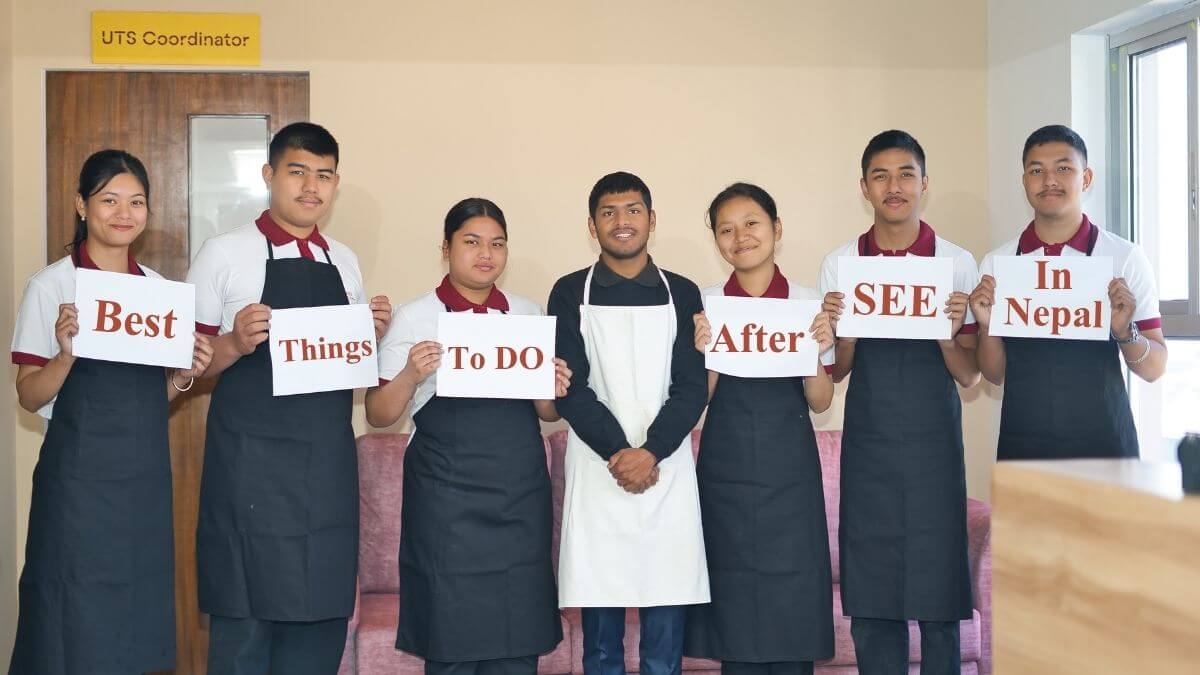
You just finished your SEE exam. That feeling is real; a mix of relief, excitement, and maybe a little confusion about what comes next.
It is okay to not have everything figured out right away. Most students don’t. But here is the thing: what you do in the next few months can actually shape your future in a big way. The good news? You have more choices than you think.
In Nepal, thousands of students ask the same question every year: “What should I do after SEE?“ Some go straight to +2. Some take a break. And some, the smart ones, use this time to create, learn, and level up, crafting a distinct skill set that makes you confident and career-ready.
This guide covers the best things to do after your SEE exam, highlighting the most practical & skillful sessions that lead to future-ready opportunities in Nepal and globally.
First Things First, Take a Short Break (But Not Too Long)
You just finished months of studying and exams. Your brain needs a rest. That is completely normal. Take a week or two off. Spend time with family. Sleep well. Go for walks. Talk to friends. Let your mind relax.
But don’t let the break go on for too long. Two weeks is good. Two months is too long. Use this rest period to also think about one simple question:
What do I enjoy doing?
Are you passionate about cooking or baking? Do you love cooking? Have you ever wanted to learn how to make your own bakery items or desserts? Do you enjoy making food look beautiful? Are you curious about coffee? Do you enjoy making coffee or want to become a skilled barista? The answer to that question can point you toward the right path.
The Smartest Move After SEE: Learn a Skill That Gets You a Job
Here is something most students don’t know: you don’t have to wait two or three years to start earning. You don’t even need to finish +2 to get a good job in Nepal’s hospitality industry.
If you pass SEE, you are already eligible to join short, skill-based courses that can get you job-ready in just one to three months. These are called CTEVT courses, programs approved by the Government of Nepal that teach you real, practical skills.
And one of the best places to do these courses is United Technical School (UTS) in Kumaripati, Lalitpur.
United Technical School: Where Skills Become Careers
United Technical School, also known as UTS, is part of the well-known United Academy Group. It is located in Kumaripati, Lalitpur, making it easy to reach from anywhere in Kathmandu Valley.
UTS is affiliated with CTEVT (Council for Technical Education and Vocational Training), which means the certificates you earn here are officially recognized – both in Nepal and abroad.
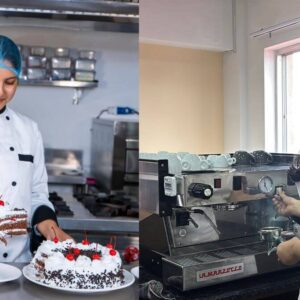
The school has modern kitchen labs, a real cafe and bakery on campus, and teachers who have worked in 5-star hotels in Nepal and around the world. When you train here, you are not just learning from a textbook. You are working in a real kitchen, making real food, and building real skills.
Here are the four courses UTS offers right now:
1. Bakery Training After SEE: Learn to Bake Like a Professional
If you have ever enjoyed making cakes, bread, or pastries, this course is made for you.
The Bakery Training course at UTS teaches you everything about baking, from simple breads to fancy pastries and custom cakes. You learn how to work in a professional kitchen, follow hygiene rules, and create baked goods that look and taste great.
UTS offers two levels:
- Basic Bakery Course: 1 month (fee: NPR 30,000). Perfect if you are new to baking and want to learn the fundamentals.
- Advanced(Professional) Bakery Course: 3 months (fee: NPR 55,000). This is for those who want to master professional baking techniques and build a serious career.
What you will learn:
- Techniques of baking breads, making pastries, cakes, and desserts
- Understanding ingredient selection and flavor combinations.
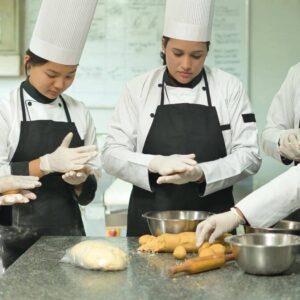
- Mastering dough preparation, mixing, and baking processes.
- Food hygiene and kitchen cleanliness
- Decorating and presenting baked goods professionally.
Who is this course designed for? Anyone who loves baking and wants a job in a hotel, cafe, restaurant, or even wants to start their own bakery someday.
Recommendation: Read our blog on “Bakery Training After SEE“
The bakery industry in Nepal is growing fast. Hotels, coffee shops, and restaurants all need trained bakers. With a CTEVT certificate from UTS, you can pursue professional opportunities both in Nepal and abroad.
Seats are filling fast, Hurry Up and Enroll Now!!
2. General Cook Course: Master the Art of Cooking
Do you love cooking for your family? Do you watch cooking shows and think “I could do that”? Then the General Cook course might be exactly what you are looking for.
This course runs for 1-month (130 hours) to 3 months (390 hours) according to your course package that covers everything you need to work as a professional cook. It is 80% practical and 20% theory, which means most of your time is spent actually cooking, not just reading about it.
What you will learn:
- Explore diverse culinary styles, including Nepali, Indian, Continental, Pan-Asian, and Chinese Cuisine
- Proficiency in Knife skills, sauce preparations, and proper meat handling techniques.
- Mastering various cooking techniques, including grilling, roasting, sautéing, and more
- Mastery of food plating and presentation techniques for professional standards.
- Thorough understanding of food safety, sanitation, and hygiene practices
- Competence in menu planning, recipe development, and culinary organization.
The course fee ranges from NPR 30,000 to 55,000, which is very affordable for the kind of career it opens up. After you finish, you receive a CTEVT-affiliated certificate that employers in Nepal and abroad recognize.
Hotels, resorts, restaurants, and cruise ships all need skilled cooks. And if you work hard, a cooking career can take you from Kathmandu to Dubai to Australia.
Seats are filling fast, Hurry Up and Enroll Now!!
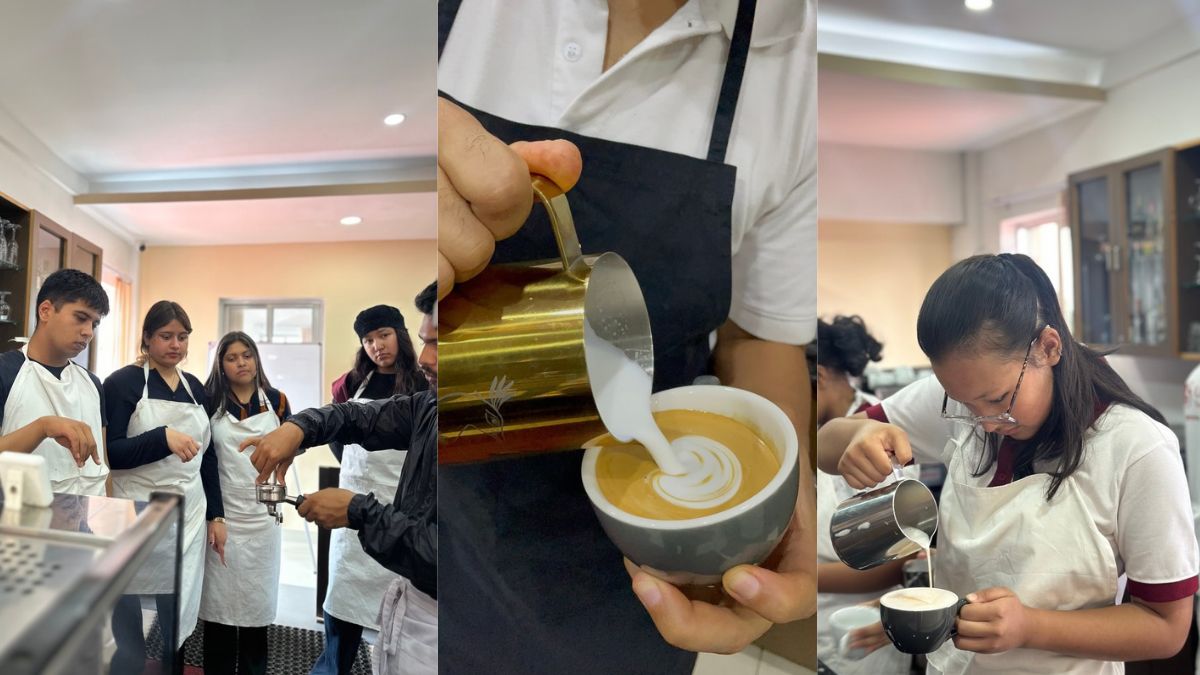
3. Barista Course in Kathmandu: Turn Your Love for Coffee Into a Career
Coffee culture in Nepal is booming. Walk through any area of Kathmandu or Lalitpur, and you will see new cafes everywhere. All of them need trained baristas.
A barista is a person who makes and serves coffee, especially drinks like espresso, cappuccino, and latte. It sounds simple, but it is actually a real skill that takes proper training.
UTS offers barista courses at different levels:
- Basic Barista Course: 18 days (fee: NPR 18,000). Learn all the core coffee-making skills. Great for a quick start.
We also have a full 1-month course that costs you Rs. 30,000, which offers you a professional hands-on experience.
What you will learn:
- How to use espresso machines and coffee grinders
- How to make espresso, lattes, cappuccinos, and pour-over coffee
- Milk frothing and latte art
- Manual brewing methods like V60, AeroPress, and French Press
- Coffee origins and how roasting affects flavor
- Customer service and cafe operations
The barista course at UTS is 80% hands-on, so you spend most of your time behind a real machine, not watching someone else do it.
This is one of the best short courses after SEE Nepal if you want to start earning quickly. Many UTS barista graduates find jobs in local cafes, hotel restaurants, and even international chains. Some even open their own coffee shops.
Seats are filling fast, Hurry Up and Enroll Now!!
4. Hotel Assistant Course: Start Your Career in Hospitality
Nepal receives millions of tourists every year. Hotels, resorts, and guesthouses are always hiring. If you like meeting people and helping them feel comfortable, the Hotel Assistant course is a smart choice.
This short course teaches you everything needed to work at the front desk, housekeeping, or guest services section of a hotel.
What you will learn:
- Front desk operations and how to check guests in and out
- Reservation systems and hotel billing
- Housekeeping, room maintenance, and cleaning standards
- Concierge services and how to handle guest requests
- Customer service and how to deal with complaints professionally
- Event management basics
After completing this course, you are ready to apply for entry-level roles in 3-star to 5-star hotels in Nepal and abroad. The hospitality sector is one of the fastest-growing in the country, and there are always positions open for trained hotel assistants.
Seats are filling fast, Hurry Up and Enroll Now!!
Why Choose United Technical School Over Other Schools?
There are many training centers in Nepal, but UTS stands out for a few honest reasons:
Real kitchen experience: The labs at UTS are set up like actual hotel kitchens and cafes. You are not practicing in a corner room; you are working in a space that looks and feels like a real workplace.
Teachers who actually worked in the industry: The instructors at UTS are not just teachers. They have worked in 5-star hotels, cafes, and restaurants in Nepal and internationally. They know what employers are looking for.
CTEVT affiliation: This matters a lot when you apply for jobs abroad, especially in countries that require skill verification.
Affordable fees: Quality training should not cost a fortune. UTS keeps its fees reasonable so that more students can access a good education.
Internship support: UTS helps students find real work experience after their courses — which means you don’t just graduate with a certificate, you graduate with actual hours logged in a real hospitality setting.
On-campus cafe and bakery. Yes, UTS has its own cafe and bakery shop on campus. Students get to see and taste the results of their training every day, and that is pretty motivating.
Also explore our blog “Best Short-Term Courses After SEE in Nepal” if you are wondering, Which One Is Right for You?
What to Do While Waiting for SEE Results
The SEE exam is over, but the results take time. So what do you do in between?
This waiting period is actually a great opportunity. Here are a few things you can do right now:
1. Research your options. Look at courses, schools, and career paths that interest you. Don’t just follow what your friends are doing.
2. Talk to people already in the field. If you are interested in cooking, talk to a chef. If you like coffee, visit a cafe and ask the barista about their job. Real conversations give you real information.
3. Visit UTS. UTS opens its doors for campus tours. Go and see the kitchen labs, meet the teachers, and get a feel for what training there looks like. It takes one afternoon and can help you make a much clearer decision.
4. Learn something basic online. While waiting, you can watch YouTube videos about cooking techniques, coffee brewing, or baking. It is free, and it helps you figure out whether you actually enjoy it before you commit.
5. Rest and recharge. Seriously. You worked hard for SEE. Give yourself a proper break before jumping into the next thing.
What About +2? Should You Still Consider It?
Yes, absolutely. +2 is still a great path, especially if you want to go to university later, study abroad, or pursue a career that requires a degree.
If you are thinking about +2 after SEE in Nepal, United Academy offers strong programs across Science, Management, and Humanities streams. You can explore those options at the United Academy Official website, click here.
But here is the honest truth: not every career needs a 4-year degree. If your goal is to get into the hospitality and culinary world, a 1 to 3-month practical course at UTS can get you there faster, cheaper, and with hands-on experience that a classroom cannot always give you.
Many successful chefs, bakers, and baristas in Nepal and abroad started exactly the same way. SEE pass, a short course, and a lot of hard work.
Conclusion
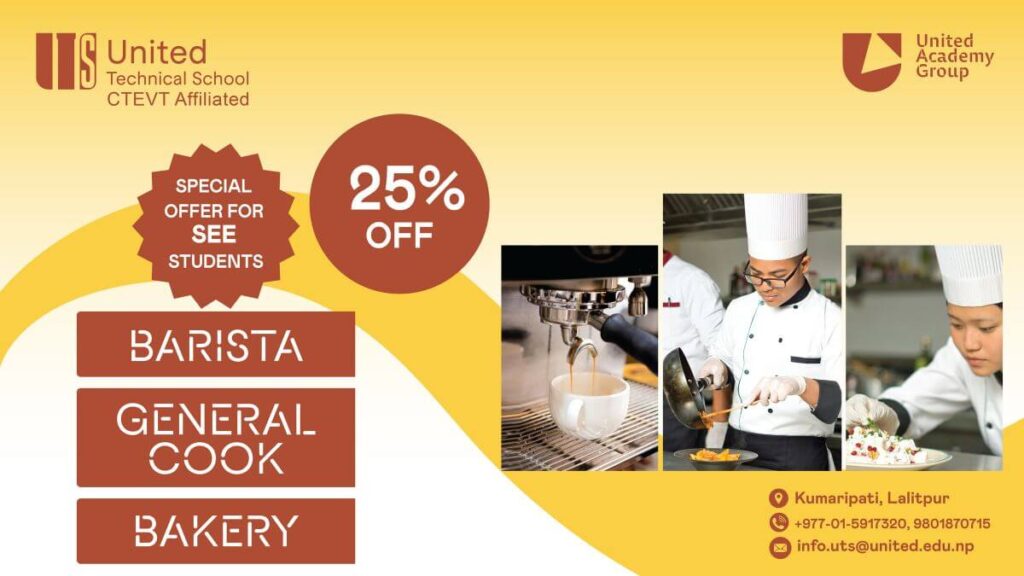
And here is something that makes this decision even easier. United Technical School is currently offering 25% off on all courses for SEE given students, so you can start your skill-based journey without putting too much pressure on your pocket.
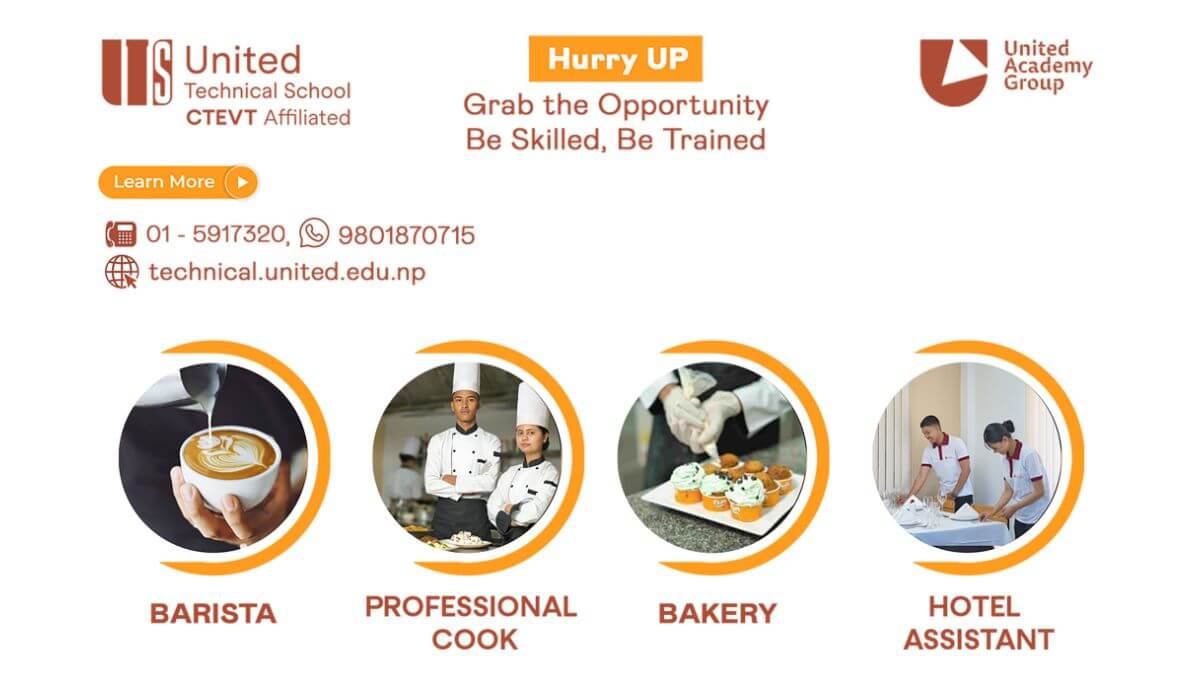
If any of the courses above excited you. Whether it is a bakery, barista, cooking, or hotel assistant, the next step is simple.
Visit United Technical School at Kumaripati, Lalitpur, or go to the official website technical.united.edu.np to learn more about each course, check the current fees, and secure your spot.
Our SEE exam is finished. The next chapter is yours to write. Start your journey from United Technical School.
FAQs
Yes. SEE pass is the minimum requirement for CTEVT-affiliated courses at United Technical School. You don’t need to wait for +2 level qualification.
The Basic Bakery course is 1 month. The Advanced Bakery course is 3 months. You can choose based on how deep you want to go.
Yes. UTS is affiliated with CTEVT, and CTEVT certificates are recognized for skill-based employment in countries like UAE, Qatar, Malaysia, and Australia.
The Barista 18 days Course is NPR 18,000 for 18 days. The Advanced Barista Course is NPR 55,000 for 3 months.
A culinary course is short, practical, and gets you job-ready fast. +2 is a two-year academic program that prepares you for university. Both are valid and it depends on your goals.
You can work in hotels, restaurants, cafes, resorts, airline kitchens, or even abroad. With experience, you can also become a head chef or start your own food business.
Yes. UTS was built specifically for students like you — those who want practical training, a recognized certificate, and real career support without spending years in a classroom.