Have you ever seen a cook preparing a dish and thought, “I wish I could do this as well?” If yes, then you’re not the only one. Cooking isn’t merely the process of preparing meals. It’s an important skill that will enable you to develop a successful career. The hospitality industry in Nepal is expanding very quickly as well. Over 1.15 million tourists have visited Nepal in the year 2025, and the number of hotels, cloud kitchens, and specialized restaurants is increasing within Kathmandu Valley.
A cooking course in Kathmandu is a great option if you enjoy cooking and want to build a career out of it. Whether you just finished your SEE, you are waiting for your +2 results, or you simply want to learn a practical skill, a cooking course can set you up for a good future.
In this guide, you will learn what you study in a cooking course, what types of cooking courses are available, what you can do after finishing, what jobs you can get, and how to choose the right cooking institute in Kathmandu.
What Is a Cooking Course?
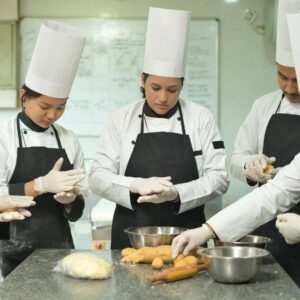
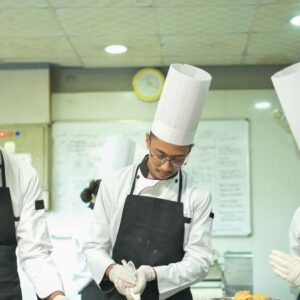
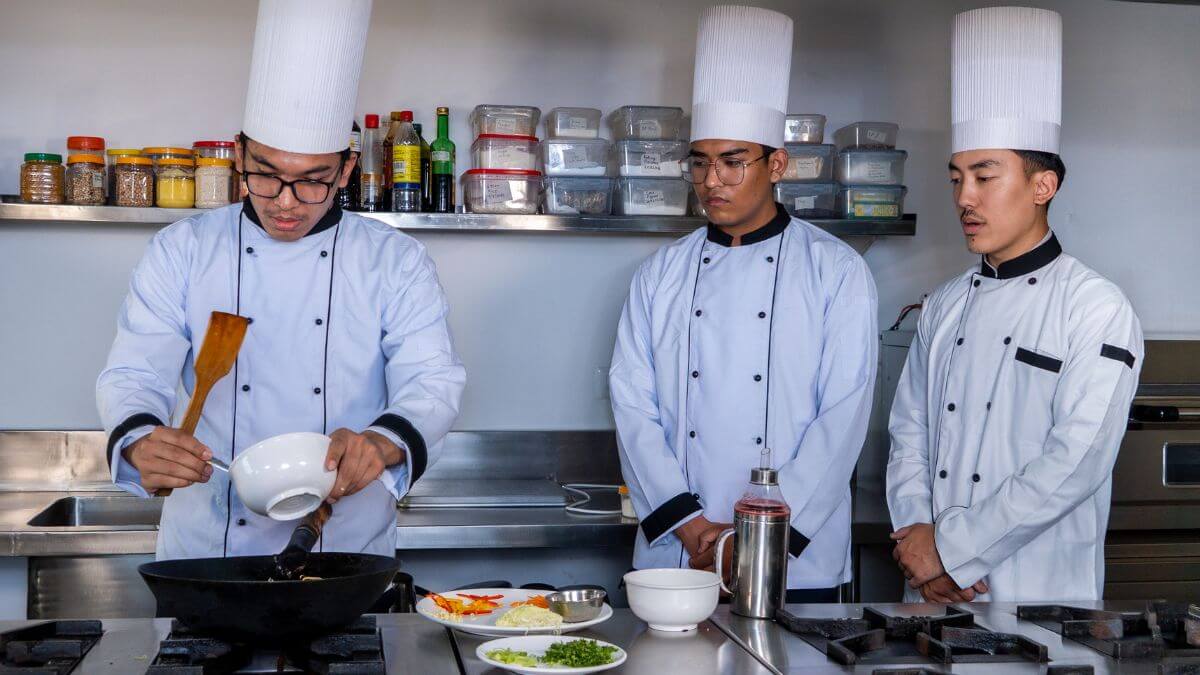
A cooking course is a program that teaches you how to cook food like a professional. You do not just sit in a classroom. You practice in a real kitchen. You will not just read recipes, you will actually try them out and learn what it feels like to work in a working kitchen environment.
Cooking courses in Kathmandu work for complete beginners and for people who already know how to cook a bit. By the end, you will feel confident making a wide range of dishes and ready to work in a kitchen where people pay to eat.
What Will You Learn?
A cooking course covers skills such as:
- Safety and hygiene procedures in the kitchen.
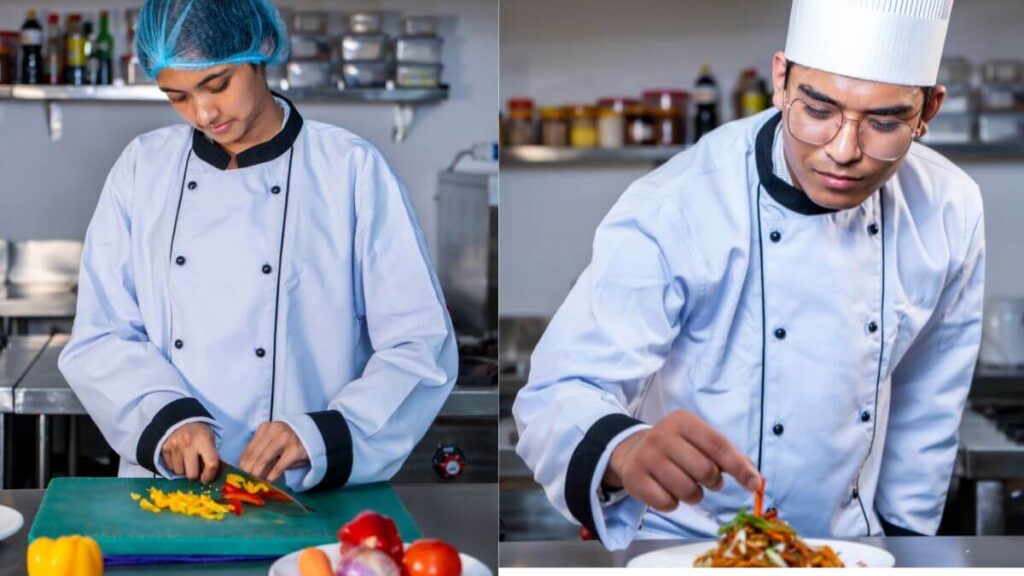
- Handling knives and preparing ingredients adequately.
- Basic to advanced cooking techniques.
- Dishes of Nepal and abroad
- Snacks such as stocks, soups, salads and desserts.
- Plating and presentation skills
- Organizing the kitchen and managing time in the kitchen.
- Planning menus and storing food.
Cooking institutes/school in Kathmandu, like United Technical School, conduct practical classes daily, to develop the muscle memory, not just theory.
Who Can Join a Cooking Course?
One of the best things about a cooking course is that almost anyone can join. You do not need prior experience to start.
A general cooking course suits SEE graduates, +2 students, complete beginners, homemakers, restaurant owners, and anyone who wants to become a chef. At United Technical School, students must be at least 16 years old with an SEE pass or equivalent, and classes run in both Nepali and English so language is not a barrier.
If you enjoy cooking and are ready to learn, a cooking course can be your first step toward a solid career in the kitchen.
If you are exploring more career options after Plus 2, read: Best Short-Term Courses After Plus 2 in Nepal 2026 – Skills That Get You Hired Fast
Types of Cooking Courses in Kathmandu
Not every student has the same goal in mind. Some want to cook as a hobby, others want to become professional chefs. That is why cooking institutes in Kathmandu structure their programs around two main durations.
Short-term basic courses (often around one month) teach students kitchen basics, such as how to use knives, how to prepare food, safety in the kitchen and basic Nepali and international recipes. These make good starting points for home cooking, a small food business or kitchen position of an apprentice.
Longer professional courses (often around three months) go deeper into international cuisines, food presentation, menu planning, food costing, and kitchen management. This is usually the better choice if you want to work in a hotel or restaurant, or if you are planning to work as a cook abroad.
Fees, exact hours, and course structure vary by institute, so it is worth comparing programs directly. For UTS-specific details on hours and cost, see the General Cook Course page.
If you want to understand the full journey of becoming a professional chef, read our guide: How to Become a Professional Chef? A Step-by-Step Guide
Cook or Chef: What’s the Difference?
Cook and chef are frequently called same, but they have a huge differences. An individual performs task of preparing food, typically as a member of a kitchen staff, in accordance with food preparation instructions and routine. A chef is usually more experienced and may specialize in a cuisine or station, or have more kitchen responsibilities and may be in charge of planning menus or running the kitchen.
The majority of cooking classes in Kathmandu teach you to cook first. That’s the base. The path to becoming a chef is more of a trade rather than an academic one, and is gained through experience in the kitchen, specialization, and time. If you are wanting to pursue a career in culinary, consider a cooking class as a starting point rather than the end point.
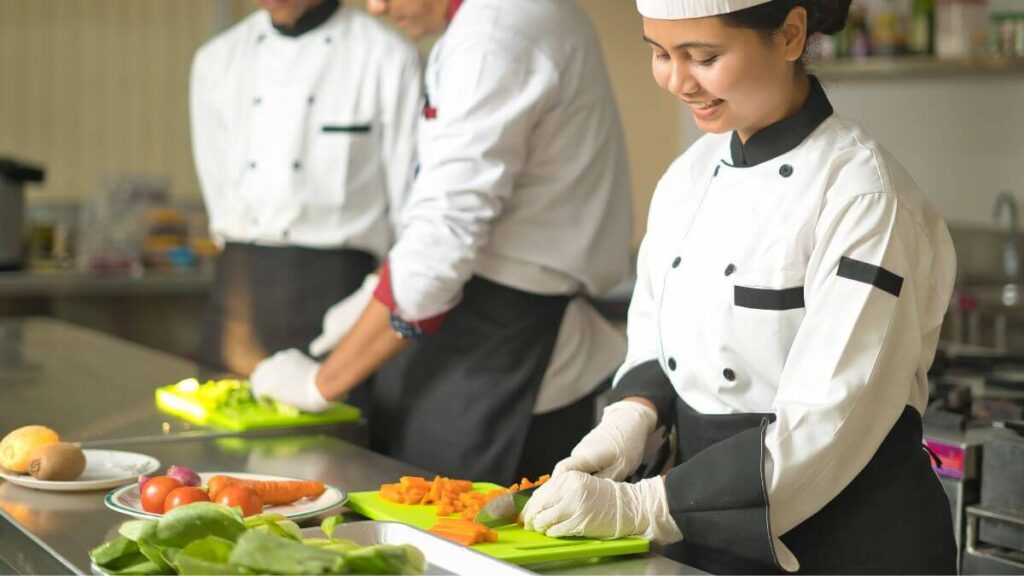
How to Choose the Best Cooking Institute in Kathmandu
Choosing the right institute matters as much as choosing the right course. A good training center builds your skills and gets you job-ready. Before you enroll, compare institutes on these points.
Experienced Instructors: Learn from chefs who have real industry experience and can share what actually happens in a working kitchen.
Practical Training: Cooking is learned by doing. The more time you spend in the kitchen, the more confident and skilled you become.
Modern Kitchen Facilities: Training in a kitchen with professional-grade equipment helps you understand what a real restaurant or hotel kitchen feels like.
Certification: A recognized certificate, such as one affiliated with CTEVT, proves your training and carries weight with employers in Nepal and abroad.
Career Support: Some institutes help you secure an internship or a job after training, which means you start your career sooner.
Is a Cooking Course Worth It?
A cooking course is a strong investment if you genuinely enjoy cooking and want to build a career from it. Hotels, restaurants, cafes, and catering services across Nepal keep opening, and they need people who can cook well. That demand makes it easier to land a job as a trained cook compared to someone with no formal training behind them.
A cooking course also teaches skills you will use for life. If you plan to start your own food business, the course prepares you for cooking, kitchen operations, and working with customers, not just recipes.
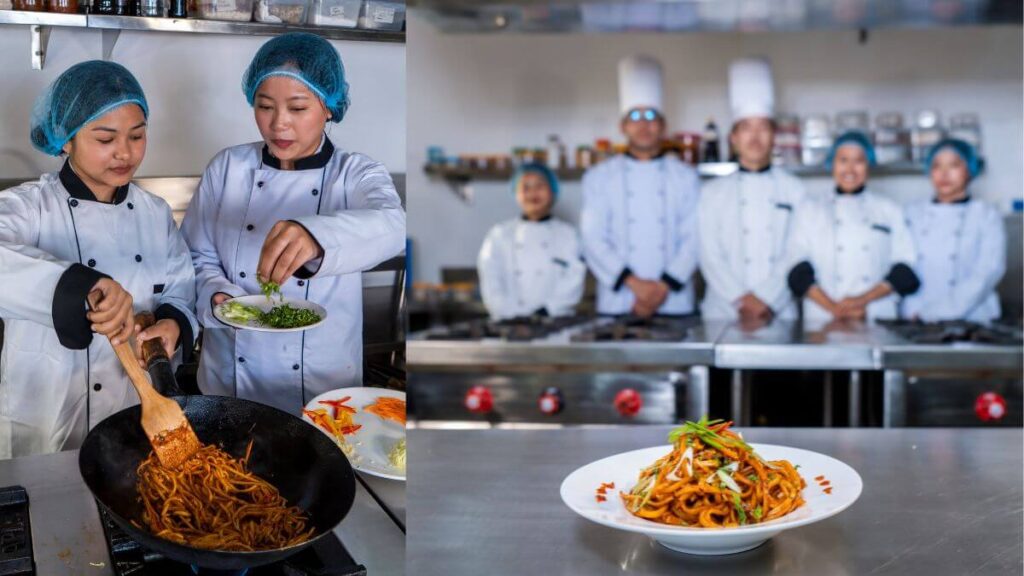
It also helps to make you more creative, more confident and more skilled at solving problems when they’re under pressure, and each day in a professional kitchen offers a new challenge. You may want to become a chef, a hotel chef, or to open your own restaurant one day, but a well structured cooking course will help you get there quicker than learning on your own at home.
Why Choose United Technical School for Cooking Training?
If you want to learn cooking in Nepal, United Technical School (UTS) in Kumaripati, Lalitpur, offers a CTEVT-affiliated General Cook Course built for exactly this. It suits complete beginners as well as anyone who wants to work in hotels, restaurants, or cafes.
You will gain professional cooking skills in Nepali and international cuisines, learn about kitchen safety, food hygiene, knife skills, menu planning and how to use professional kitchen equipment in this course. The training is primarily practical. Sessions take place in a real training kitchen with fresh ingredients and immediate feedback from trainers such as Mr. Sujit Dawadi, who has many years’ experience in a professional kitchen and is a certified Teacher of Trainers. Previous students have found the training to be useful and helpful in building up their confidence.
This hands-on approach helps you build real skills and the confidence to work in a professional kitchen from day one. After completing the course, you can start your career in hotels, restaurants, cafes, or catering services, or launch your own food business.
UTS also includes placement support at no extra cost, connecting graduates to its network of restaurants, hotels, and recruitment partners across Nepal. Students who want extra experience can join an optional internship of at least 15 days in a real kitchen. Because the certificate is CTEVT-affiliated, it is also recognized by many recruitment agencies placing cooks in Gulf countries, Japan, Korea, and Australia.
If you would like to learn more about career-focused training opportunities, check out our blog: Why United Technical School Is the Best Choice After SEE in Nepal
Ready to get started? Enroll now or contact UTS to ask about batch timings in Kumaripati, Lalitpur.
General Cooking Course in Kathmandu | Best Cook Training Class in Nepal
Admissions are open for new Classes at Kumraipati Lagankhel
Is a Cooking Course Worth It?
A cooking course is a strong investment if you genuinely enjoy cooking and want to build a career from it. Hotels, restaurants, cafes, and catering services across Nepal keep opening, and they need people who can cook well. That demand makes it easier to land a job as a trained cook compared to someone with no formal training.
A cooking course also teaches skills you will use for life. If you plan to start your own food business, the course prepares you for cooking, kitchen operations, and working with customers.
You also become more creative, confident, and better at solving problems, because every day in a professional kitchen brings a new challenge. Whether your goal is to become a chef, work in a hotel, or open your own restaurant, a structured cooking course gets you there faster than learning on your own.
Conclusion
If you are looking to pursue a career in hospitality, taking a cooking course in Kathmandu is a good choice. It helps you learn how to cook safely, efficiently and as a professional cook. These are the skills that employers in Nepal are seeking during hiring for hospitality jobs and these skills are taught at a cooking course in Kathmandu.
Whether you just finished your SEE, you are a +2 student, or you are simply changing careers, a cooking course in Kathmandu can open doors. After finishing, you can work in hotels, restaurants, cafes, or catering services, or start your own food business with the skills and CTEVT-affiliated certificate to back you up.
FAQs
The majority of beginners courses teach you how to cook and include basic skills, knife techniques, foods hygiene etc. The skills required to become a chef are acquired later, by experience in the kitchen, specialization and work in professional cooking environment after the Course.
A cooking course provides you with a structured training, food safety knowledge, and a recognised certificate, and within a shorter time than informal skills. There is also learning at work, but employers appreciate having candidates who have an understanding of kitchen hygiene, technique and menu basics before they start their first day.
Not necessarily. Many institutes in Kathmandu, including UTS, run classes in both Nepali and English, so language should not stop you from joining if you are comfortable with Nepali instruction.
You can pick up basic cooking at home, but a structured course adds food safety training, professional technique, and a certificate that employers recognize, which is hard to replicate cooking on your own.
Check previous experience of the Instructor, the ratio of Practical/ Theoratical units, if the certificate is recognized (for example, affiliated by CTEVT) and whether the institute provides Placement/ Internship after completion of the Course.
You will learn food preparation, kitchen safety, knife skills, food hygiene, Nepali and international cuisine, menu planning, food presentation, and professional kitchen practices, including advanced chef training areas like sauce making and food costing.
Many students use their training to start restaurants, cafes, catering services, cloud kitchens, or home-based food businesses after completing a professional cooking course.